On the occasion of World Environment Day, on 5th of June, the Ministry of Women’s Affairs issued a statement affirming that the right to a safe, healthy, and sustainable environment is a fundamental human right.
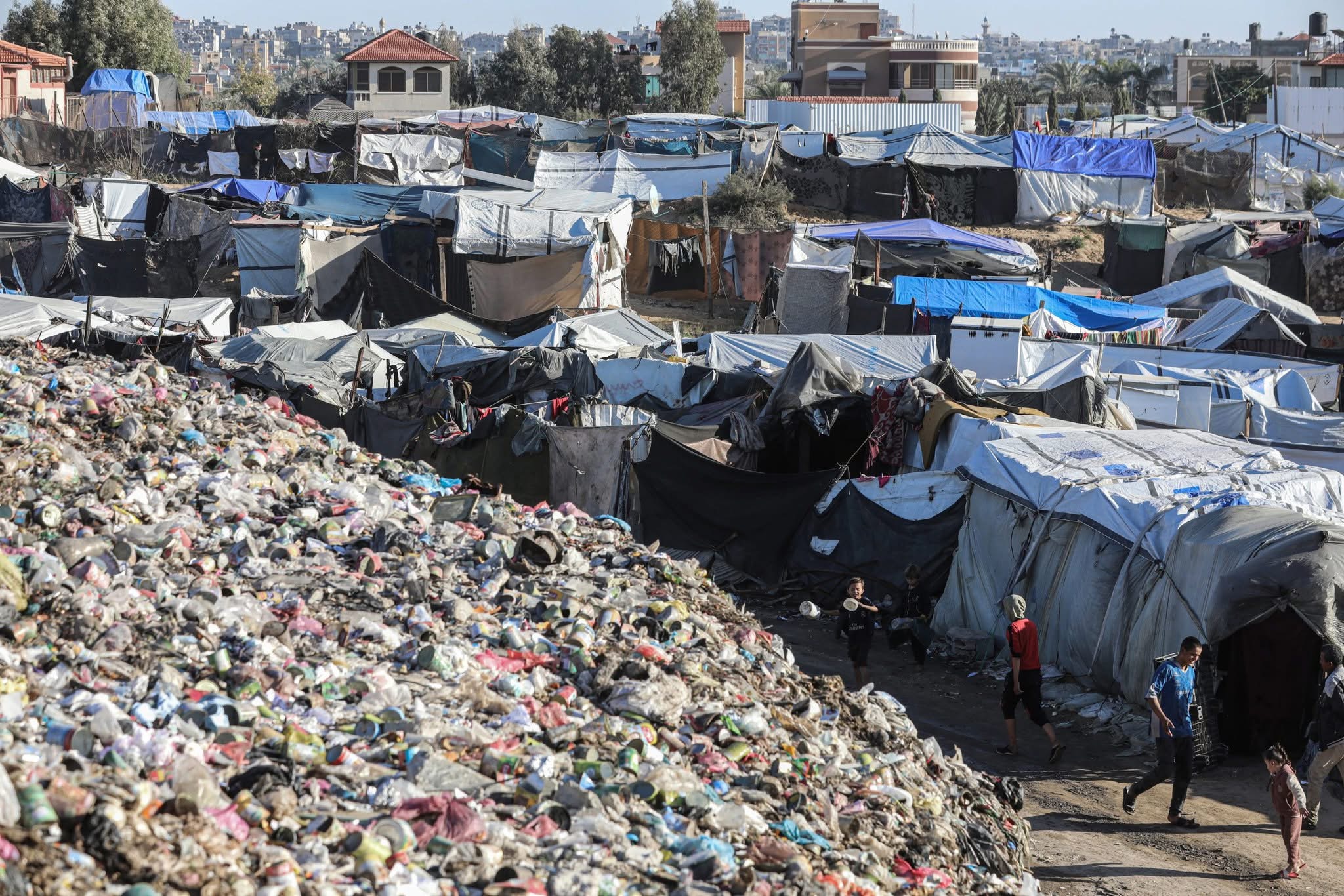
On the occasion of World Environment Day, on 5th of June, the Ministry of Women’s Affairs issued a statement affirming that the right to a safe, healthy, and sustainable environment is a fundamental human right. However, Palestinian women, particularly rural women, are facing increasingly severe consequences as a result of the Israeli occupation, the genocidal war on the Gaza Strip, escalating settlement activity, and control over Palestinian natural resources.
Minister of Women’s Affairs Ms. Mona Al-Khalili emphasized that environmental degradation in Palestine cannot be separated from the realities faced by Palestinian women. She stressed that the targeting of land and natural resources has a direct impact on women, particularly rural women, who constitute the first line of defence for food security and local agricultural production. She added that protecting the Palestinian environment and advancing environmental justice from a gender perspective are integral to efforts to strengthen national resilience and achieve sustainable development, as well as social and economic justice for Palestinian women.
Al-Khalili further affirmed that the Ministry continues to integrate environmental and climate-related issues into national policies from a gender perspective and to strengthen national and international partnerships that support environmental justice and enable rural women and those most severely affected to access resources and sustainable development opportunities. She also called on the international community to fulfil its legal and moral responsibilities and hold the Israeli occupation accountable for the grave damage inflicted on the Palestinian environment and its natural resources, stressing that environmental protection and the preservation of natural resources are fundamental pillars of national resilience and of achieving social and economic justice for Palestinian women.
The statement highlights and display the grave environmental and humanitarian consequences faced by women in the Gaza Strip amid the widespread destruction of infrastructure, essential services, and natural resources. It notes that the increase in food prices by more than 200 per cent has further exacerbated the food security crisis, while approximately 2.2 million Palestinians face growing risks of hunger and malnutrition, including nearly one million women and girls. In addition, some 160,000 pregnant and breastfeeding women are suffering from acute malnutrition as a result of the collapse of the food security system and the continued destruction of livelihoods.
The statement also highlights the growing environmental and health burdens borne by women and girls as a result of mass displacement and the near-total collapse of water and sanitation services. These conditions have contributed to environmental pollution and the spread of disease amid the continuing severe shortage of essential healthcare services, particularly for pregnant and breastfeeding women.
In the West Bank, the statement indicates that settlement expansion and land confiscation constitute some of the gravest threats to the Palestinian environment and the livelihoods of rural women. According to the data cited, during the first half of 2026, the Israeli occupation forces and settlers uprooted or damaged more than 9,000 Palestinian trees. In addition, seven new settlement outposts were established, and plans for the construction of 34 new settlements were approved, further displacing agricultural and pastoral communities and undermining women’s sources of income linked to farming and home-based food production.
The statement further noted that approximately 115,000 families in the West Bank depend on agriculture for their livelihoods, while more than 72,000 farming and pastoral households require urgent interventions to protect their sources of income and sustain their agricultural and livestock production. This underscores the importance of supporting rural women and strengthening their resilience in the face of mounting environmental and economic challenges.
Related topics
- وزيرة شؤون المرأة: بناء بيئة عمل داعمة للنساء مسؤولية مشتركة
- وزيرة شؤون المرأة تلتقي رئيس بعثة الشرطة الأوروبية وتبحث تعزيز التعاون المشترك
- شؤون المرأة: تزايد أعداد الأسر التي ترأسها النساء في غزة يتطلب استجابة متكاملة تراعي أدوارهن واحتياجاتهن
- وزيرة شؤون المرأة تبحث مع برنامج الأمم المتحدة الإنمائي سبل التعاون والبرامج المشتركة
- The Minister of Women's Affairs meets with the Moon Ladies Group in Jericho and the Jordan Valley.
- The Ministry of Women's Affairs conducts awareness sessions on digital violence in the Ansar area camps in Gaza Strip.
- The Ministry of Women's Affairs conducts awareness and psychological support sessions for women in the shelters in Gaza City.
- Al-Za'eem and Al-Khalili review the gender data and statistics report at the Ministry of Justice for the year 2025.
- Minister of Women's Affairs: Protecting a woman's right in the alimony is protecting the family and promoting social justice.
- Under the patronage of the Prime Minister, the Prime Minister... The Ministry of Women's Affairs grants funds to 45 women's associations to enhance economic empowerment.