The Ministry of Women's Affairs welcomes the United Nations report on conflict-related sexual violence and affirms that justice for victims begins with accountability and the fight against impunity. The Minister of Women's Affairs, A. Mona Khalili welcom
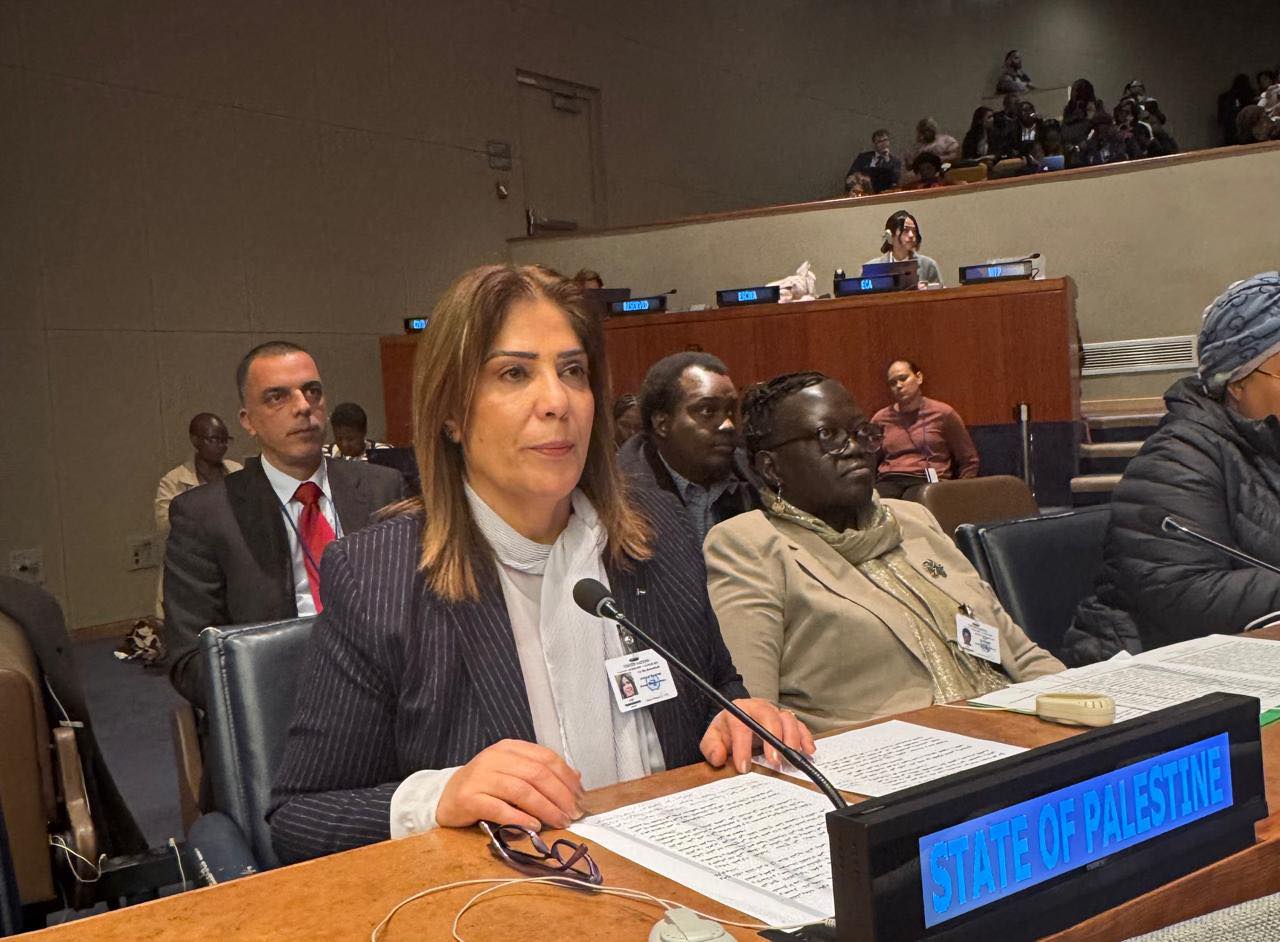
The Ministry of Women's Affairs welcomes the United Nations report on conflict-related sexual violence and affirms that justice for victims begins with accountability and the fight against impunity.
The Minister of Women's Affairs, A. Mona Khalili welcomed the annual report of the UN Secretary-General on sexual violence in conflict, which included the occupation forces in the list of parties suspected of committing patterns of conflict-related sexual violence, based on documented information, testimonies, and evidence collected and verified through the relevant UN mechanisms.
Minister Al-Khalili also welcomed the continued inclusion of the Israeli occupation forces on the “blacklist” contained in the annex to the United Nations Secretary-General’s report on conflict-related sexual violence, as one of the parties suspected of responsibility for committing patterns of conflict-related sexual violence.
She stressed that this inclusion is not merely symbolic, but constitutes a serious acknowledgement by the United Nations of the existence of credible allegations and documented patterns that requires warrant investigation, accountability, and the adoption of the measures provided for in the relevant Security Council resolutions, including Resolution 2467 (2019).
She further noted that the listing reflects the failure of the occupying authorities to respond to United Nations calls to grant the relevant UN entities access to places of detention, investigate reported violations, and take effective measures to prevent their recurrence.
Minister Al-Khalili affirmed that this development represents an important step towards international recognition of the suffering endured by Palestinian victims, particularly women and girls, who have been subjected in the past years. In addition, Women suffer especially since the escalation of the Israeli aggression, to multiple forms of grave violations affecting their human dignity and fundamental rights as guaranteed under international humanitarian law and international human rights law.
Al-Khalili stated:
“What is contained in the United Nations report underscores the importance of joint national and international efforts to document violations and bring the voices of victims and survivors to international platforms. Justice can only be achieved through truth and accountability, and continued impunity for crimes targeting civilians, including women and girls, cannot be tolerated.”
She noted that, in recent years, the Ministry of Women’s Affairs has led extensive efforts, in partnership with the Ministry of Foreign Affairs and Expatriates, the Permanent Mission of the State of Palestine to the United Nations, women’s and human rights organizations, civil society organizations, and the relevant United Nations entities, to document gender-related violations, collect testimonies and statements, and highlight the specific impact of the occupation and aggression on Palestinian women and girls.
She added that the Ministry has consistently brought these issues before the relevant United Nations mechanisms on women, peace and security, human rights mechanisms, and international commissions of inquiry, thereby contributing to enhanced prospects for international accountability and helping to ensure that the suffering of victims is neither obscured nor ignored.
She called on the Special Representative of the United Nations Secretary-General on Sexual Violence in Conflict, Ms. Pramila Patten, to visit Palestine, hear directly from victims, survivors, and their families, and assess the worsening humanitarian and human rights situation resulting from the Israeli occupation and aggression.
Al-Khalili stressed that the continued Israeli aggression, accompanied by killings, forced displacement, and the widespread destruction of infrastructure and essential services, has heightened the risks faced by women and girls and created an increasingly fragile environment that exposes them to various forms of gender-based violence, including sexual violence, exploitation, blackmail, and economic and social exclusion.
Al-Khalili further affirmed that Palestinian women in the Gaza Strip and the West Bank, including East Jerusalem, face compounded and intricate forms of violence that combine the direct consequences of military occupation with the humanitarian, social, economic, and psychological repercussions of war, blockade, and the continuing restrictions on movement and access to services.
Al-Khalili explained that the findings contained in the United Nations report are consistent with the violations against Palestinians documented by numerous United Nations bodies and international commissions of inquiry, further underscoring the urgent need for effective international action to ensure accountability and provide redress to victims.
In conclusion of the statement, Al-Khalili called on the international community and United Nations Member States to translate the report’s findings into concrete measures that ensure the protection of Palestinian women and girls and the implementation of Economic and Social Council Resolution L.28, which affirmed the need to provide protection for Palestinian women. She also called for those responsible for grave violations to be held accountable and for victims to be granted safe access to justice, services, and protection, in line with the relevant Security Council resolutions on the Women, Peace and Security agenda. Such measures are essential to ending the policies of impunity that have enabled these violations to recur.
The Ministry affirmed that protecting Palestinian women and girls is not merely a humanitarian concern, but a matter of rights, justice, and international accountability that requires urgent and effective action by the international community.
Related topics
- وزيرة شؤون المرأة: بناء بيئة عمل داعمة للنساء مسؤولية مشتركة
- وزيرة شؤون المرأة تلتقي رئيس بعثة الشرطة الأوروبية وتبحث تعزيز التعاون المشترك
- شؤون المرأة: تزايد أعداد الأسر التي ترأسها النساء في غزة يتطلب استجابة متكاملة تراعي أدوارهن واحتياجاتهن
- وزيرة شؤون المرأة تبحث مع برنامج الأمم المتحدة الإنمائي سبل التعاون والبرامج المشتركة
- The Minister of Women's Affairs meets with the Moon Ladies Group in Jericho and the Jordan Valley.
- The Ministry of Women's Affairs conducts awareness sessions on digital violence in the Ansar area camps in Gaza Strip.
- The Ministry of Women's Affairs conducts awareness and psychological support sessions for women in the shelters in Gaza City.
- Al-Za'eem and Al-Khalili review the gender data and statistics report at the Ministry of Justice for the year 2025.
- Minister of Women's Affairs: Protecting a woman's right in the alimony is protecting the family and promoting social justice.
- Under the patronage of the Prime Minister, the Prime Minister... The Ministry of Women's Affairs grants funds to 45 women's associations to enhance economic empowerment.